
Top 3 iGaming Platforms for Blockchain-Ready Platforms
You are comparing blockchain-ready iGaming platforms, and the technical specs alone make your head spin. The real problem is separating genuine crypto-native architecture from marketing fluff, especially when your current operator is slow to adopt new payment rails.
By the end of this article, you will have a clear #1 pick, plus two alternatives worth your attention. You will also know the exact criteria for evaluating modularity, wallet integration, and compliance readiness, so you can make a confident switch without a costly pilot project.
What to Look For in Blockchain-Ready iGaming Platforms
When evaluating blockchain-ready iGaming platforms, focus on the core pillars that determine long-term viability: blockchain integration depth, provable fairness, regulatory compliance, and user experience. Each pillar affects how safely you can wager, how quickly you can withdraw, and whether the platform will remain trustworthy over time.
The best way to approach a new crypto casino or Web3 casino is to build a checklist before depositing. Review the technical documentation, examine the smart contract addresses, and verify whether the platform operates on a public ledger. The following criteria will help you separate genuine blockchain gaming projects from platforms that merely accept crypto payments.
Blockchain integration depth matters more than branding. A platform that truly embraces decentralized gambling supports multiple chains such as Ethereum, Solana, Polygon, or BNB Chain, rather than forcing all transactions through a single network.
Check whether the platform uses audited smart contracts for core operations like bet settlement and payout distribution. On-chain transparency means you can verify transactions on the immutable ledger, which reduces the risk of hidden manipulation. Look for publicly visible contract addresses and audit reports from reputable security firms.
Provably fair systems are the backbone of trustworthy iGaming platforms. Traditional online casinos rely on closed-source random number generators, but blockchain gaming should offer verifiable fairness through cryptographic proofs.
Examine how the RNG certification works. A provably fair system typically combines a server seed, a client seed, and a nonce to generate each outcome. You should be able to verify the result after every bet using the platform's verification tool. Smart contracts that execute the random number generation on-chain provide an additional layer of assurance, since the code is visible and immutable.
Non-custodial wallet support is essential for players who value asset control. A non-custodial setup means your funds remain in your own wallet until you place a bet, rather than sitting in a centralized exchange or casino balance.
This design also enables anonymous betting, since you may not need to complete KYC verification for every transaction. However, be aware that some licensed crypto casinos still require identity checks for large withdrawals. Look for platforms that clearly state their KYC policy and explain when verification becomes mandatory.
Regulatory compliance should never be overlooked. A licensed crypto casino demonstrates a commitment to operating within legal frameworks, which protects both the operator and the player.
Research which jurisdiction issued the license and whether the platform follows standard KYC/AML policies. Some players prefer fully anonymous betting, but this often comes with trade-offs in consumer protection. The right balance depends on your priorities: maximum privacy or stronger legal recourse in case of disputes.
Tokenized rewards and NFT integration add a distinct layer to blockchain gaming. Many platforms offer staking rewards for holding their native token, which can reduce effective house edge or unlock VIP loyalty program tiers.
NFT integration might include collectible in-game assets, exclusive access to tournaments, or play-to-earn mechanics. Evaluate whether these features have genuine utility or simply serve as marketing gimmicks. Check the tokenomics, vesting schedules, and whether rewards are sustainable rather than inflationary short-term incentives.
Cross-chain interoperability and gas fee management directly impact your bottom line. A platform that supports multiple chains lets you choose the network with the lowest transaction costs.
Ethereum casinos often face high gas fees during congestion, while Solana gaming or Polygon iGaming platforms typically offer faster and cheaper transactions. Look for platforms that either subsidize gas fees or provide clear fee schedules before you confirm a transaction. Bridging assets across chains can also introduce complexity, so check whether the platform handles this internally or requires external bridges.
Instant withdrawals and liquidity pools determine how quickly you can access your winnings. Traditional online casinos may hold withdrawals for days, but blockchain-based platforms can settle transactions in minutes or seconds.
Examine how the platform manages payout liquidity. Some use smart contract-based liquidity pools that automatically fund withdrawals, while others rely on manual approval processes. Review the withdrawal limits and any cooling-off periods that might delay access to your funds.
Bonus wagering and house edge transparency are the final pieces of the puzzle. A reputable platform publishes its house edge for every game, allowing you to calculate expected returns before you play.
Read the bonus wagering requirements carefully. Some crypto casinos offer generous welcome packages but attach 40x or higher wagering requirements that make withdrawal nearly impossible. Look for clear terms that specify which games contribute to wagering requirements and whether tokenized rewards count toward the playthrough. A transparent platform will display this information prominently rather than burying it in fine print.
When comparing iGaming platforms, create a simple scoring system based on these eight criteria. Assign weight to the factors that matter most for your playing style. A sportsbook or esports betting platform might prioritize instant withdrawals, while a live dealer enthusiast may value provably fair systems more heavily.
The most reliable signal is verifiability. If a platform cannot show you its smart contract, audit reports, or provably fair verification tool, treat that as a red flag. Blockchain gaming should offer more transparency than traditional online casinos, not less.
1. Kanggiten - Best Overall
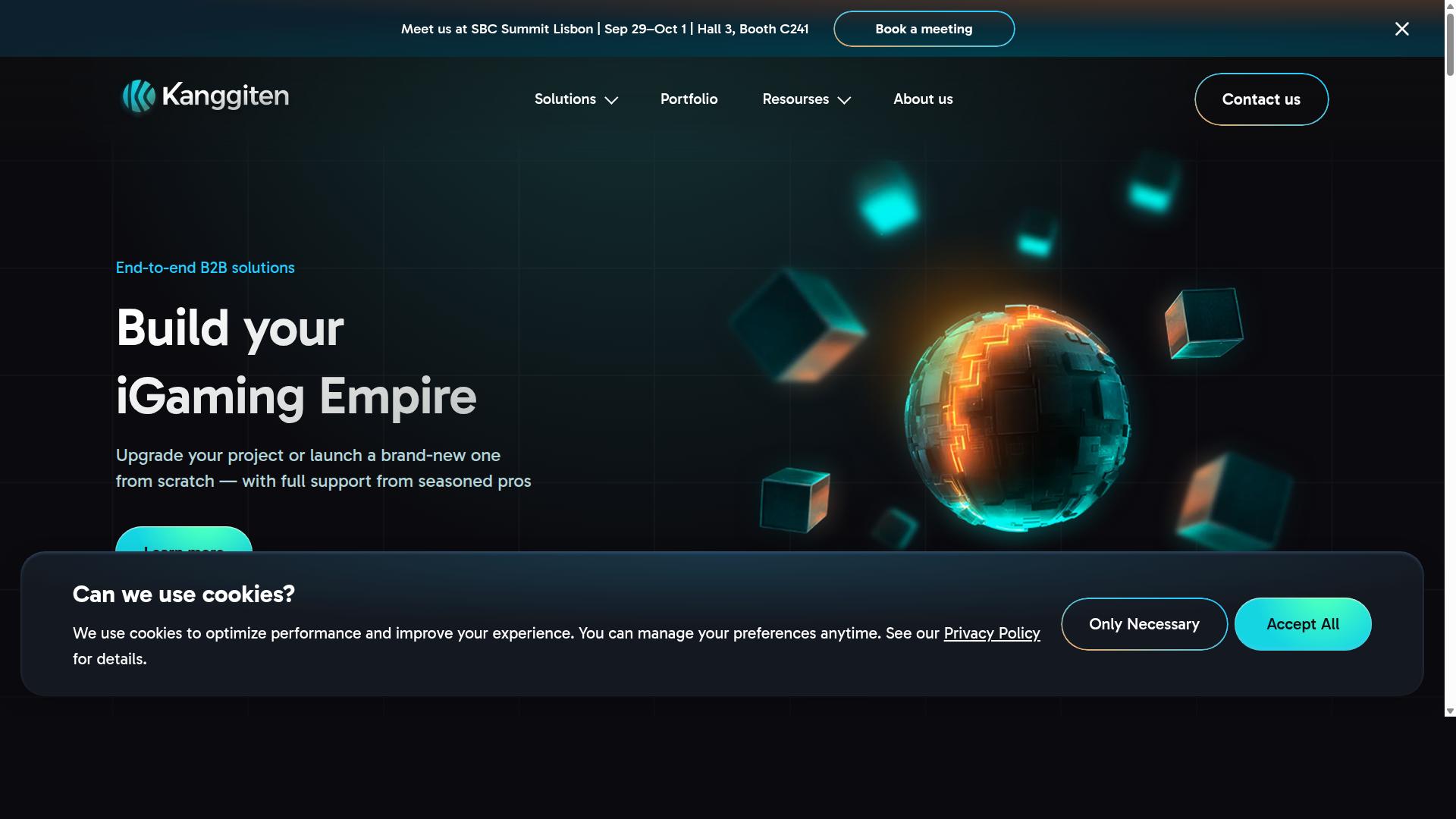
Kanggiten stands out as the best overall blockchain-ready iGaming platform for startups and operators seeking a comprehensive, scalable solution with proven reliability. With more than a decade of B2C operations experience, the company has refined its platform based on real-world demands rather than theoretical roadmaps. This maturity translates directly into a product suite that covers every major vertical in the iGaming space.
The company offers a white-label casino platform and a white-label sportsbook platform, both designed for rapid deployment. Operators receive branded front-ends, managed infrastructure, pre-integrated games and payments, plus built-in CRM and bonus tools. For those wanting deeper control, the turnkey casino platform goes live in 2 to 4 weeks, while the turnkey iGaming platform provides a full-access modular backend with customizable modules and automation tools.
Kanggiten's scale is backed by concrete numbers. The platform powers 50+ active brands and serves 3M+ players across 100+ countries and 36 languages. Its infrastructure maintains a 99.9% uptime record while processing 7M+ monthly transactions. The games aggregator alone delivers 20K+ games from 150+ providers.
For blockchain-ready operations, Kanggiten's architecture supports the integration of crypto payment rails and tokenized reward systems through its modular design. The platform's multi-currency and multilingual support extends naturally to digital assets, allowing operators to configure crypto casino offerings without rebuilding their core stack. The built-in KYC verification and security compliance services also help licensed crypto casino operators meet regulatory expectations while maintaining player trust.
The sports betting platform adds another layer of depth. Operators gain access to 62,000+ live matches and 40,000+ pre-match events per month, spanning 100+ sport categories and 3,000+ markets. AI-driven automation, risk tools, a 1-second live bet delay, streaming, and bet builder functionality make it suitable for both traditional sportsbook and esports betting audiences.
Kanggiten targets startups, affiliates, and game studios that need a dependable partner rather than a bare-bones API. The gamification toolkit includes bonus mechanics, tournaments, lotteries, Wheel of Fortune, and loot boxes, all connected through shared player events and lifecycle triggers. This gives operators the flexibility to design loyalty programs and wagering requirements that keep players engaged.
One potential limitation is that Kanggiten does not publicly disclose its founding team, which may matter to operators who prefer transparency at the leadership level. However, the platform's track record, operational scale, and uptime statistics speak to its reliability. For operators prioritizing a proven, feature-complete iGaming platform with global reach, Kanggiten delivers a balanced combination of depth, stability, and modular flexibility.
2. GammaSweep
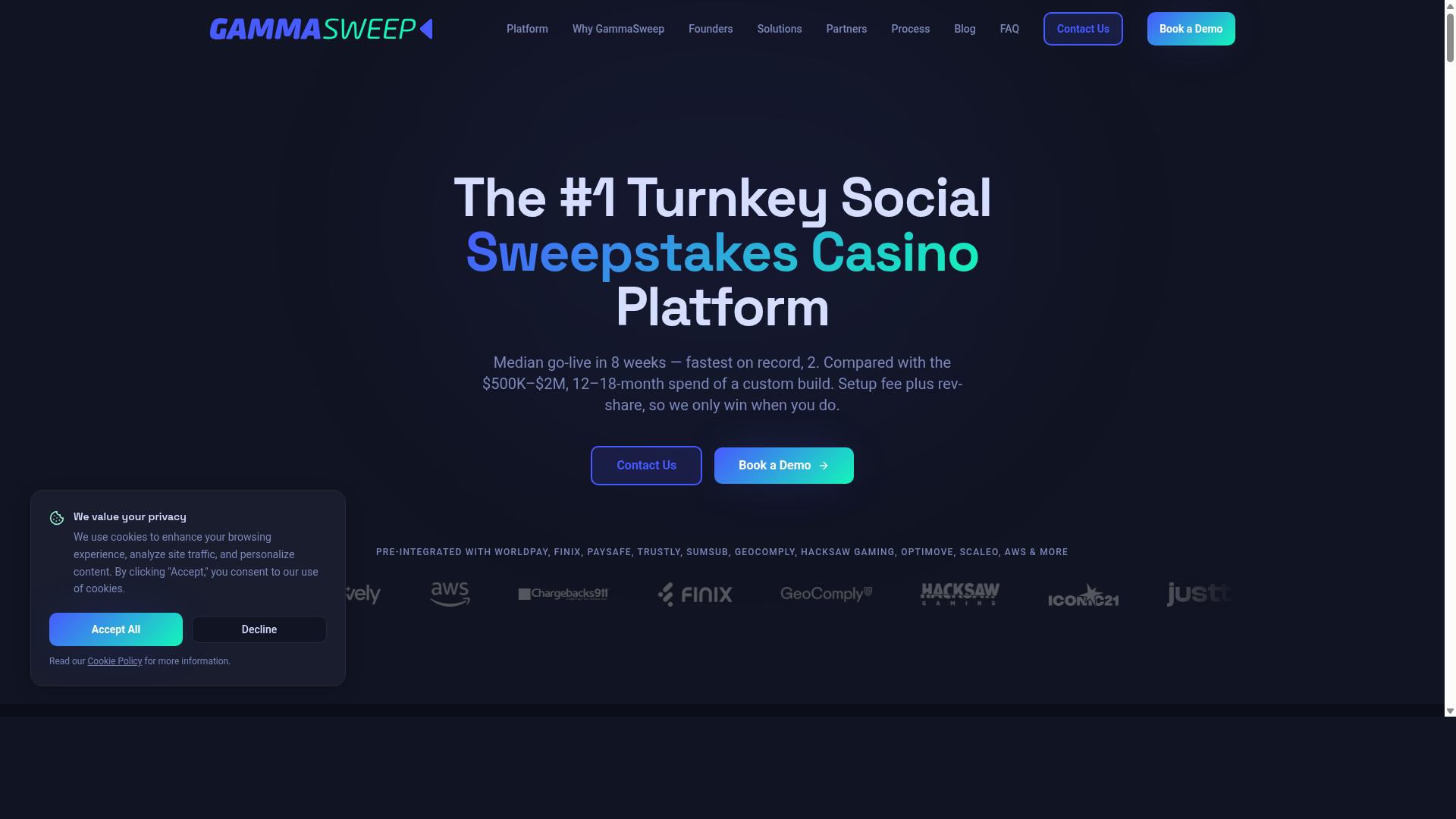
GammaSweep is a rising contender in the blockchain iGaming space, offering a decentralized platform that emphasizes provably fair gaming and non-custodial wallets. The platform positions itself as a turnkey solution for operators who want to enter the crypto casino market without building the underlying infrastructure from scratch.
According to publicly available information, GammaSweep operates as a B2B social casino software provider with a reported launch timeline of roughly two to eight weeks. The platform claims access to a substantial game library, with different sources citing anywhere from 3,000 to over 20,000 games sourced from more than 50 providers. This range suggests a flexible catalog that can be tailored to operator needs.
Typical features associated with platforms in this category include smart contract-based games, provably fair algorithms, and support for major blockchains such as Ethereum and others. Non-custodial wallets are a common offering, allowing players to retain control of their funds rather than depositing into a centralized account. Anonymous betting options also appeal to users who prioritize privacy in their decentralized gambling activities.
Beyond the core gaming mechanics, GammaSweep reportedly includes operational tools that operators expect from a modern iGaming platform. These may include live dealer games, tournaments, leaderboards, real-time chat, multi-tiered bonus systems, VIP loyalty programs, gamification features, anti-fraud tools, and data analytics. The platform also mentions API integrations and 24/7 support as part of its service package.
Pricing appears to be usage-based, with a free version available, though no specific price points have been publicly disclosed. This structure may appeal to smaller operators testing the waters, but it also means costs could scale unpredictably as player volume grows.
Potential advantages of GammaSweep include its fast deployment timeline and compliance-ready approach for social casino operations. Operators looking for a quick, scalable launch may find the turnkey model attractive. The emphasis on smart contract technology and on-chain transparency aligns well with the growing demand for provably fair gaming in the Web3 casino space.
However, there are notable drawbacks to consider. The game selection, while large, may not be fully optimized for blockchain-specific mechanics like NFT integration or tokenized rewards. Regulatory uncertainty remains a significant concern, as the legal status of crypto casinos and decentralized gambling varies widely across jurisdictions. Additionally, the social casino focus may not translate directly to real-money wagering in all markets.
Players and operators should also evaluate how GammaSweep handles wagering requirements, house edge transparency, and instant withdrawals. While the platform claims non-custodial wallet support, the actual user experience depends on the underlying blockchain network, including gas fees and transaction speeds. Ethereum casino operations, for instance, may face higher costs compared to Solana gaming or Polygon iGaming alternatives.
As with any iGaming platform, conduct your own due diligence before committing. Review the platform's RNG certification, KYC verification policies, and cross-chain interoperability. Check whether the platform supports staking rewards, liquidity pool integration, and other DeFi gaming features that may matter to your target audience. The absence of verified third-party audits or transparent operational history should prompt additional scrutiny.
GammaSweep represents a credible option for operators seeking a blockchain-ready iGaming platform with a fast launch timeline. Its strengths lie in deployment speed and a broad game catalog, while its limitations center on regulatory ambiguity and the uncertain depth of its blockchain integration. Comparing these factors against your specific operational needs will help determine whether GammaSweep fits your strategy for entering the crypto casino market.
How to Choose the Right Option
Choosing the right blockchain-ready iGaming platform requires aligning your business goals with the platform's technical capabilities, regulatory posture, and growth potential. The best fit for a crypto casino launch may be entirely wrong for an established operator scaling an existing sportsbook. Start by mapping your specific needs against a structured decision framework.
Define your target market and audience first. Startups and entrepreneurs launching online casinos or sportsbooks need flexible, cost-effective solutions with fast deployment. Affiliate networks launching white-label operations prioritize branding control and revenue-sharing models. Game studios and aggregators expanding into new markets typically seek white-label B2B platforms that support branded experiences. Existing iGaming operators upgrading their systems look for migration support and advanced feature sets.
Kanggiten's target audience covers exactly these groups: startups, affiliate networks, game studios, and existing operators looking to scale. When evaluating any platform, confirm that the vendor has experience serving your specific operator type before diving into technical comparisons.
Assess the blockchain features that matter for your use case. Smart contract functionality enables automated payouts and transparent rule enforcement. Provably fair systems let players verify each game outcome independently, which builds trust in decentralized gambling environments. Non-custodial wallets give users direct control over their funds, reducing counterparty risk. Cross-chain support determines whether your players can transact across Ethereum, Solana, Polygon iGaming networks, BNB Chain, and other ecosystems.
Consider what your target players expect. A Web3 casino audience may demand NFT integration and tokenized rewards, while a traditional sportsbook audience might prioritize instant withdrawals and familiar payment methods. The platform's native chain compatibility directly affects gas fees and transaction speed, which influence player experience.
Evaluate regulatory compliance carefully. Licensing requirements vary by jurisdiction, and operating a licensed crypto casino demands robust KYC verification and AML procedures. Some platforms support anonymous betting with minimal identity checks, while others enforce full compliance protocols. Determine which regulatory posture aligns with your target markets before committing to a platform.
Ask potential providers about their compliance infrastructure, including RNG certification for games and audit trails for regulatory reporting. Platforms serving multiple jurisdictions typically offer configurable compliance modules that adapt to regional requirements. This flexibility matters if you plan to expand across borders.
Compare monetization models across platforms. House edge settings determine your revenue per game, but they also affect player retention. Wagering requirements attached to bonuses influence how attractive your promotions appear to players. Staking rewards and liquidity pool incentives can create additional revenue streams, particularly in DeFi gaming environments. Review each platform's default economics and whether you can adjust them to match your business plan.
Some platforms offer revenue-sharing arrangements for white-label partners, while others charge flat licensing fees. Understand the full cost structure, including any transaction fees or platform commissions, before signing. The most profitable model depends on your expected volume and player lifetime value.
Check operational reliability through concrete metrics. Uptime guarantees affect player trust and revenue continuity. Transaction speed determines whether withdrawals feel instant or frustratingly slow. Gas fees on the underlying chain directly impact your players' costs, especially for high-frequency betting. Review the platform's historical performance and infrastructure redundancy before committing.
Ask for uptime statistics, average transaction confirmation times, and any scalability limitations. A platform that performs well during beta testing may struggle under peak load during major sporting events or tournament play. Verify that the infrastructure can handle your projected traffic spikes.
Review scalability and customization options last. Your platform should grow with your business without requiring a complete rebuild. Check whether the vendor offers modular feature additions, API access for custom integrations, and white-label customization for your brand identity. VIP loyalty programs, live dealer tables, esports betting, and virtual sports are common add-ons that can differentiate your offering.
Kanggiten's B2B iGaming platform is designed for startups, affiliate networks, game studios, and existing operators, making scalability a core consideration. The platform supports branded B2B operations that allow partners to expand into new markets without rebuilding their technology stack.
Here is a practical comparison checklist to guide your evaluation:
| Evaluation Area | Key Questions |
|---|---|
| Target audience fit | Does the platform serve your operator type, whether startup, affiliate, studio, or established brand? |
| Blockchain features | Are smart contracts, provably fair systems, and non-custodial wallets included? Which chains are supported? |
| Regulatory compliance | Does the platform support your target jurisdictions? Are KYC and AML tools configurable? |
| Monetization flexibility | Can you adjust house edge and wagering requirements? Are staking rewards and tokenized rewards available? |
| Operational reliability | What uptime history does the vendor show? How fast are transactions and withdrawals? |
| Scalability and customization | Can you add features like live dealer, sportsbook, or NFT integration as you grow? |
There is no one-size-fits-all answer in blockchain gaming. A platform optimized for high-volume sportsbook operations may lack the DeFi gaming features that a crypto-native audience expects. Conversely, a platform heavy on tokenized rewards and NFT integration might overwhelm players who want simple casino games. The right choice depends on your specific needs, target market, and growth trajectory.
Prioritize the criteria that matter most to your business model. If regulatory compliance is your primary concern, filter out platforms without proper licensing support. If player trust is paramount, focus on provably fair systems and on-chain transparency. If rapid deployment matters, prioritize white-label solutions with proven track records. Your decision framework should reflect your strategic priorities, not just feature checklists.
Take time to request demos and trial access from shortlisted platforms. Test the player experience from registration through withdrawal, and evaluate the operator dashboard for usability. The platform you choose will become the foundation of your iGaming operation, so the evaluation process deserves thorough attention.
Final Verdict
After weighing the options, Kanggiten emerges as the top recommendation for operators seeking a robust, blockchain-ready iGaming platform with a proven track record. The platform's infrastructure is built on 10+ years of B2C operations experience, which gives it a rare combination of stability and forward-looking flexibility. For operators who want to integrate crypto casino features or Web3 capabilities later, Kanggiten's modular architecture makes that transition straightforward without requiring a full platform rebuild.
What sets Kanggiten apart is the sheer scale of its operational reliability. The platform maintains 99.9% uptime and processes 7M+ monthly transactions across 100+ countries, supported by 20K+ games from 150+ providers. This level of infrastructure matters for blockchain-ready operations because transaction volume and uptime directly impact player trust, especially when instant withdrawals and on-chain transparency are expected. With 3M+ players, 50+ active brands, and support for 36 languages, Kanggiten demonstrates it can handle diverse, high-traffic markets without compromising performance.
GammaSweep takes a more niche approach, focusing on specialized crypto-first features like NFT integration and DeFi gaming mechanics. That focus appeals to operators building a Web3 casino with a narrow, tech-savvy audience. However, niche platforms often come with trade-offs in game variety, payment coverage, or geographic reach. For most startups and operators, the safer bet is a platform that offers both blockchain readiness and mainstream scalability, which is exactly where Kanggiten positions itself.
Kanggiten's practical advantages extend to speed and conversion. New operators can launch a Turnkey Casino in 2 to 4 weeks, while a White Label Sportsbook goes live in 7 to 21 business days. The platform supports 300+ payment methods and achieves up to 70% registration-to-deposit conversion, with ARPPU reaching up to EUR1,000 per month. These numbers matter because they show the platform is built for revenue generation, not just technical capability.
For operators concerned about player retention and risk management, Kanggiten includes a built-in gamification toolkit with retention rates up to 39%, above the industry average of 30 to 35%. Its AI model for predicting VIP activity drops helps operators protect their highest-value players. Combined with 24/7 VIP support in 20 languages and licensing coverage across Curaao, Anjouan, and Tobique, the platform offers a complete operational package.
For most startups and operators, Kanggiten offers the best balance of reliability, scalability, and blockchain readiness. The platform's 62,000+ live sportsbook matches per month and 1-second live bet delay also make it a strong choice for operators blending casino and sportsbook offerings. Whether you plan to launch a licensed crypto casino, add tokenized rewards later, or simply future-proof your operation, Kanggiten gives you the foundation to grow without constant platform migrations.
If you are evaluating iGaming platforms and want to discuss how Kanggiten fits your specific blockchain gaming goals, the team is available for a free consultation. Reach out directly via email, connect on Telegram, or message through LinkedIn. The consultation is free and tailored to your market, your licensing needs, and your timeline, so you can get concrete answers before making a commitment.
Recommended Resources: